English
- English
- Español
- Português
- русский
- Français
- 日本語
- Deutsch
- tiếng Việt
- Italiano
- Nederlands
- ภาษาไทย
- Polski
- 한국어
- Svenska
- magyar
- Malay
- বাংলা ভাষার
- Dansk
- Suomi
- हिन्दी
- Pilipino
- Türkçe
- Gaeilge
- العربية
- Indonesia
- Norsk
- تمل
- český
- ελληνικά
- український
- Javanese
- فارسی
- தமிழ்
- తెలుగు
- नेपाली
- Burmese
- български
- ລາວ
- Latine
- Қазақша
- Euskal
- Azərbaycan
- Slovenský jazyk
- Македонски
- Lietuvos
- Eesti Keel
- Română
- Slovenski
- मराठी
- Srpski језик

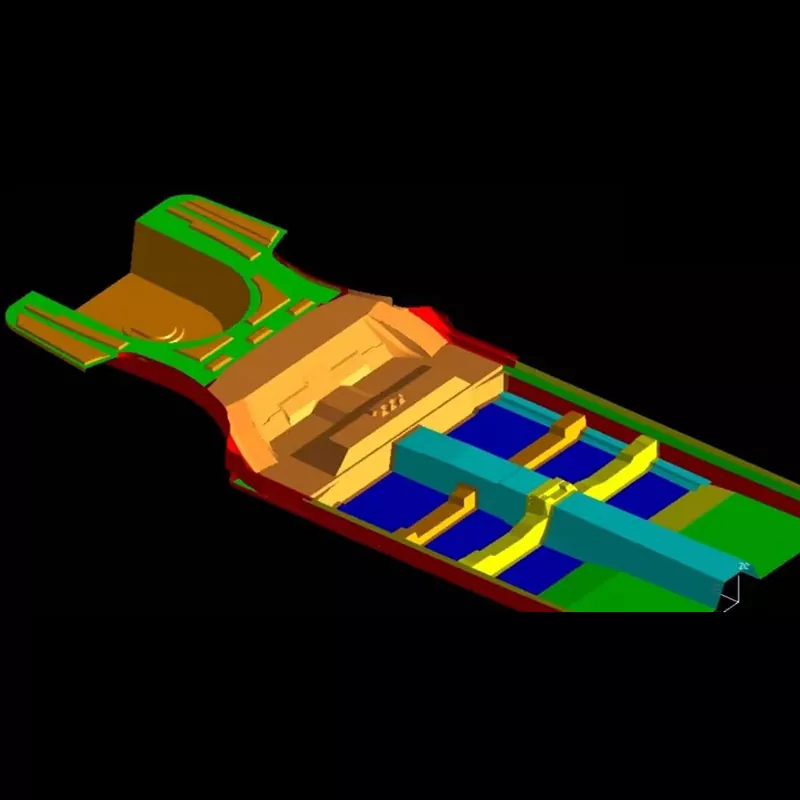
Automotive Floor Assembly Stamping Dies
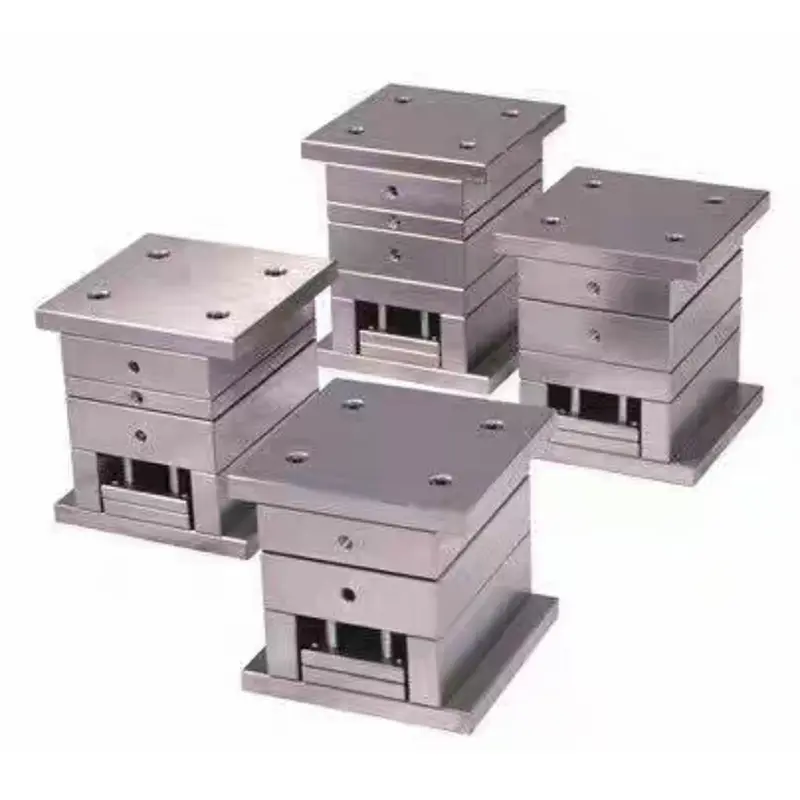
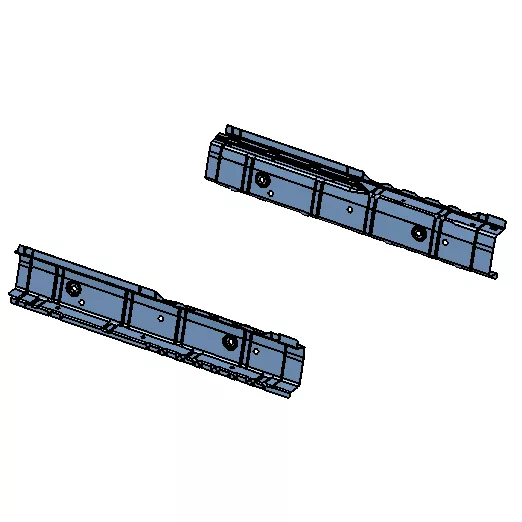
The automotive floor assembly is a critical structural component of the vehicle body, and its stamping dies represent the highest level of automotive stamping die technology. SIKAIDA provides complete, high-precision large-scale stamping die systems for forming steel floor assemblies such as DC04, DC06, and B280. As a professional manufacturer rooted in China, we integrate end-to-end services to deliver reliable and durable Automotive Floor Assembly Stamping Dies that meet global standards, supporting mass production of floor parts for passenger and commercial vehicles and ensuring precise tolerances and part consistency.
The Automotive Floor Assembly Stamping Dies are large-scale, high-precision integrated systems for stamping the main framework of the floor. They are not single dies, but complete die combinations (because the floor assembly requires welding multiple stamped parts). They represent the pinnacle of stamping technology and are a key benchmark for measuring the strength of die manufacturers.
As a trusted supplier in the automotive industry, SIKAIDA focuses on the R&D and production of high-end floor assembly dies, producing products with robust structures, precise forming, and long lifespans. Our factory employs fully digital design and precision manufacturing to ensure that every die meets the stringent requirements of the automotive industry.
Key Product Features:
1. Large Size and Complex Structure
These molds are large in size (length > 1.5m, width ≥ 1.2m), with complex cavities. They require forming mounting holes, reinforcing ribs, and other features. A multi-station design is employed, integrating deep drawing, forming, punching, and trimming processes.
2. High Precision and High Strength Requirements
The Automotive Floor Assembly Stamping Dies have dimensional tolerances controlled within ±0.5mm, with strict requirements for flatness and contour. They also possess extremely high rigidity, resisting high-pressure stamping deformation and ensuring consistency in mass-produced parts.
3. Multi-Process Integration
The mold integrates multiple processes such as deep drawing, forming, and trimming. Optimized process layout reduces production steps, and compatibility with automated stamping lines significantly improves production efficiency.
4. Complete Forming System
The Automotive Floor Assembly Stamping Dies feature a large structure, including core components such as punches and dies. Equipped with an advanced pneumatic-hydraulic system, they operate smoothly and efficiently, ensuring high reliability.
5. Advanced Cooling and Lubrication System
Automotive Floor Assembly Stamping Dies are equipped with conformal cooling water channels and a high-efficiency lubrication system, ensuring uniform mold temperature, improving production efficiency and part quality, and reducing part deformation and residual stress.
Materials and Applications
1. Application Areas
Widely used in the body manufacturing of passenger cars, SUVs, MPVs, and commercial vehicles.
2. Material Selection
The Automotive Floor Assembly Stamping Dies mold base uses standard steels such as 45# steel and Q235, while core components use high-carbon, high-chromium mold steels such as Cr12MoV and SKD11. After heat treatment, the hardness reaches HRC48-52, and the service life exceeds 500,000 cycles.
Manufacturing Process
1. CAE simulation analysis to solve forming problems in advance;
2. full 3D mold design to ensure a reasonable structure;
3. selection of high-quality mold steel;
4. rough machining, fine machining, heat treatment, and fine polishing to ensure precision;
5. assembly and trial molding, debugging and optimization until the parts meet standards.
Development Trends
1. Ultra-large integrated molding, compatible with presses over 2000 tons;
2. Lightweight adaptation, compatible with new materials and advanced forming processes;
3. Intelligent manufacturing digitalization, enabling real-time monitoring and virtual debugging;
4. 3D printing applications, improving the manufacturing efficiency and quality of complex parts.
Frequently Asked Questions
Q1: What materials are typically used in Automotive Floor Assembly Stamping Dies?
A1: Standard steel (such as 45 steel, Q235) is commonly used for the mold base. High-carbon, high-chromium mold steel (such as Cr12MoV, SKD11) is used for key parts such as cavities and cores. After heat treatment, the hardness can reach HRC48-52, with high wear resistance and high compressive strength.
Q2: How long is the production cycle for automotive floor assembly stamping dies?
A2: The development cycle for Automotive Floor Assembly Stamping Dies is long (usually 8-15 months) and costly (reaching millions to tens of millions of RMB), making it a key benchmark for measuring the comprehensive strength of a mold company. As automobiles develop towards intelligence, electrification, and lightweighting, the technical requirements for their molds will continue to increase.
Send Inquiry
Contact Info
-
Address
Fengze Two Avenue, Balitai Industrial Park, Jinnan District, Tianjin City, China
-
Tel
-
Email
Welcome to our website! For inquiries about our products or pricelist, please leave your email to us and we will be in touch within 24 hours.
Related Products

News Recommendations