English
- English
- Español
- Português
- русский
- Français
- 日本語
- Deutsch
- tiếng Việt
- Italiano
- Nederlands
- ภาษาไทย
- Polski
- 한국어
- Svenska
- magyar
- Malay
- বাংলা ভাষার
- Dansk
- Suomi
- हिन्दी
- Pilipino
- Türkçe
- Gaeilge
- العربية
- Indonesia
- Norsk
- تمل
- český
- ελληνικά
- український
- Javanese
- فارسی
- தமிழ்
- తెలుగు
- नेपाली
- Burmese
- български
- ລາວ
- Latine
- Қазақша
- Euskal
- Azərbaycan
- Slovenský jazyk
- Македонски
- Lietuvos
- Eesti Keel
- Română
- Slovenski
- मराठी
- Srpski језик

High-Performance Graphite Raw Materials for OEM Purchase from China Supplier with Factory Direct Bulk Order Price Quotation
Graphite, an allotrope of carbon, possesses a unique layered hexagonal structure and excellent physicochemical properties, making it an indispensable key raw material for modern industries such as new energy, semiconductors, aerospace, and metallurgy. Graphite raw materials are natural or artificial materials with graphite as the main component, including natural graphite, artificial graphite, graphene, and their derivatives. As a reliable manufacturer specializing in high-end carbon materials, SIKAIDA provides stable, high-performance graphite solutions to industrial customers worldwide.
Material Classification and Core Characteristics
1. Natural Graphite
Formed through long-term geological metamorphism, natural graphite is classified into flake graphite, vein graphite, and amorphous graphite, exhibiting excellent natural crystallinity, electrical conductivity, thermal conductivity, and lubricity. SIKAIDA selects high-quality mineral sources and employs precise purification processes to ensure consistency in carbon content and particle size distribution.
2. Artificial Graphite
Based on carbonaceous raw materials such as petroleum coke and needle coke, it is produced through molding, calcination, and high-temperature graphitization (2500–3000℃). Its purity, structure, and performance are controllable, making it a mainstream choice for lithium-ion battery anodes and high-end heat dissipation components.
3. Graphene and Graphite Derivatives
Graphene is a single-layer two-dimensional crystal peeled from graphite raw materials, possessing ultra-high specific surface area, electrical conductivity, and mechanical strength. SIKAIDA's graphene-reinforced composite materials can support high-end applications such as supercapacitors and heat dissipation systems.
Core Physicochemical Properties:
1. Electrical Conductivity: Free electrons within the layers achieve metallic-level electrical conductivity.
2. Thermal Conductivity: Thermal conductivity as high as 1500–2000 W/(m·K), approaching that of diamond.
3. High Temperature Resistance: Melting point approximately 3850±50℃, exhibiting excellent stability in non-oxidizing environments.
4. Chemical Stability: Resistant to corrosion from most acids, alkalis, and organic solvents at room temperature.
5. Lubricity: Weak interlayer van der Waals forces allow for low-friction sliding.
6. Mechanical Strength: Soft texture, but high tensile and fatigue strength.
Typical Manufacturing Process
1. Raw Material Pretreatment: Natural graphite requires mining and beneficiation; artificial graphite requires crushing and screening of carbonaceous raw materials.
2. Mixing and Molding: Mixed with binder, and formed into the desired shape through extrusion, molding, or isostatic pressing.
3. Calcination: Heated at 800–1000℃ under an inert atmosphere to carbonize the binder.
4. Graphitization: High-temperature heat treatment causes carbon atoms to rearrange to form a graphite lattice (a key step in artificial graphite).
5. Post-treatment: Impregnation, re-calcination, machining, and surface coating optimize product performance.
SIKAIDA possesses a fully upgraded Graphite Raw Materials production plant, achieving closed-loop quality control from raw materials to finished products, ensuring batch stability and traceability.
Main Application Areas
1. New Energy Sector
Lithium-ion battery anode materials, fuel cell catalyst carriers, supercapacitor electrodes
2. Semiconductor and Electronics Sector
Monocrystalline silicon growth heaters and insulating components, semiconductor diffusion and masking materials, high-power device heat dissipation
3. Aerospace and Defense Sector
High-temperature structures and thermal protection systems, aerospace braking components, radar absorbing materials
4. Metallurgy and Chemical Sector
Refractory materials (largest consumer sector), steel deoxidizers and carbonizers, chemical heat exchangers and reactors
5. Everyday and Industrial Applications
Pencil leads, lubricants, non-stick cookware coatings
Industry Trends and SIKAIDA Advantages
The graphite industry is developing towards high purity, miniaturization, composite functionalization, and intelligent green manufacturing. As a leading supplier in China, SIKAIDA integrates R&D, production, and customization services to support high-growth sectors such as power batteries, semiconductors, and aerospace.
Frequently Asked Questions
Q1: What is the difference between graphite and graphene?
A1: Graphite is a bulk layered material, while graphene is its single-layer two-dimensional structure.
Q2: What are the differences between natural graphite and synthetic graphite?
A2: Natural graphite has inherent crystallinity, while the purity and consistency of synthetic graphite are easier to control.
Q3: Why does graphite have electrical conductivity?
A4: The sp² hybridized carbon atoms within the layers form delocalized free electrons, enabling electrical conductivity.
- View as

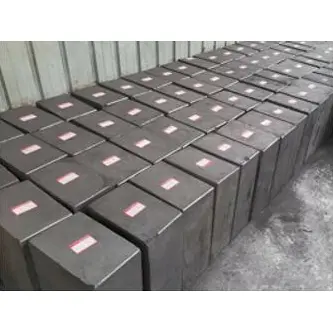
Isostatic Graphite
SIKAIDA, a leading Chinese manufacturer of isostatic graphite, focuses on the research, development, production, and supply of high-quality isostatically pressed graphite. Utilizing advanced isostatic pressing technology, the graphite is refined from high-purity petroleum coke or needle coke, resulting in products with uniform structure, high strength, excellent thermal conductivity, and resistance to high-temperature corrosion, maintaining stability even in extreme environments. As a reliable supplier, we provide customized solutions to global customers, widely used in key industrial sectors such as semiconductors and photovoltaics.
SIKAIDA is a professional Graphite Raw Materials manufacturer and supplier in China. We have an experienced sales team, professional technicians, and an after-sales service team.