English
- English
- Español
- Português
- русский
- Français
- 日本語
- Deutsch
- tiếng Việt
- Italiano
- Nederlands
- ภาษาไทย
- Polski
- 한국어
- Svenska
- magyar
- Malay
- বাংলা ভাষার
- Dansk
- Suomi
- हिन्दी
- Pilipino
- Türkçe
- Gaeilge
- العربية
- Indonesia
- Norsk
- تمل
- český
- ελληνικά
- український
- Javanese
- فارسی
- தமிழ்
- తెలుగు
- नेपाली
- Burmese
- български
- ລາວ
- Latine
- Қазақша
- Euskal
- Azərbaycan
- Slovenský jazyk
- Македонски
- Lietuvos
- Eesti Keel
- Română
- Slovenski
- मराठी
- Srpski језик

Why Are Lightweight Materials Forcing a Complete Rethink of How Automotive Stamping Dies Are Designed?
SIKAIDA is closely connected with the changing Automotive Stamping Dies industry as lightweight materials and electric vehicle development reshape traditional automotive production methods.
The automotive sector is experiencing one of its biggest structural changes in decades. As vehicle manufacturers focus on improving energy efficiency, extending driving range, and reducing emissions, lightweight materials such as aluminum alloys, high-strength steel, and advanced composite materials are becoming increasingly common. This shift is not only changing vehicle design but also forcing engineers to rethink how stamping dies are developed and applied.
For decades, conventional stamping processes were mainly optimized for traditional steel components with predictable forming behavior. However, newer lightweight materials bring different levels of strength, flexibility, and forming difficulty. These changes are creating new challenges for mold design, machining accuracy, and production consistency.

Lightweight Materials Are Changing the Rules of Automotive Stamping
Reducing vehicle weight has become a key strategy in modern automotive engineering, especially for electric vehicles where battery weight remains a major consideration.
A lighter body structure can improve energy efficiency, but achieving this goal requires more advanced manufacturing approaches. Aluminum alloys, for example, offer excellent weight reduction potential but behave differently from traditional steel during stamping. They may require improved forming control, better surface protection, and more precise tooling conditions.
High-strength steel creates another challenge. Although it provides better structural strength with thinner material thickness, its increased hardness can create higher wear pressure on stamping tools.
These material changes mean that traditional die designs often need to be adjusted.
| Lightweight Material | Main Advantage | New Challenge for Stamping Process |
|---|---|---|
| Aluminum alloy | Lower vehicle weight | Higher risk of surface defects and forming difficulty |
| High-strength steel | Improved structural strength | Greater stress on stamping dies |
| Advanced composite materials | Design flexibility and weight reduction | More complex forming requirements |
| Ultra-high-strength steel | Enhanced safety performance | Requires stronger tooling systems |
The result is a growing demand for stamping solutions that combine precision machining, structural stability, and long-term performance.
Why Traditional Die Design Is No Longer Enough
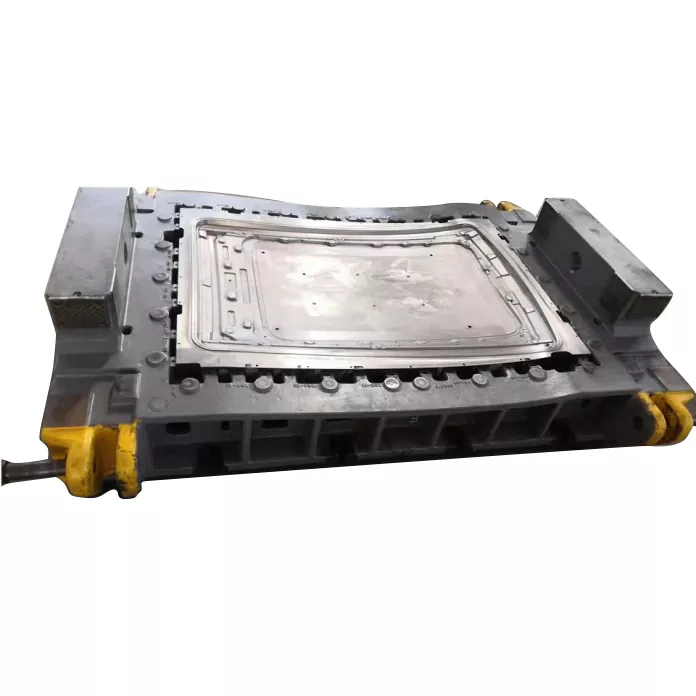
Automotive stamping dies are not simply tools for shaping metal sheets. They are precision systems that determine the accuracy, appearance, and consistency of vehicle components.
When lightweight materials are introduced, several factors become more important:
Improved Material Flow Control
Different materials respond differently during stamping. Engineers must carefully analyze material movement to reduce wrinkles, cracks, and deformation during the forming process.
Higher Dimensional Accuracy
Modern automotive structures often contain complex curves and integrated designs. Small dimensional variations in stamping processes can affect later assembly operations and overall vehicle quality.
Better Wear Resistance
High-strength materials create additional friction and pressure during production. Stamping dies require improved surface treatment and precise machining to maintain stable performance over extended production cycles.
Faster Development Cycles
Automotive projects are becoming more dynamic. Tooling systems must adapt quickly to changing vehicle platforms and component designs while maintaining production reliability.
EV Development Is Accelerating Stamping Technology Upgrades
The growth of electric vehicles has added another layer of complexity to automotive tooling.
Unlike traditional vehicles, EV platforms often require redesigned body structures, battery protection systems, and lightweight supporting components. These changes increase the demand for large and complex stamped parts.
For example, battery enclosures require strong yet lightweight structures. Body panels need to maintain appearance while meeting safety requirements. These applications require more accurate tooling systems capable of handling advanced materials.
Modern Automotive Stamping Dies must therefore support not only forming accuracy but also production stability under changing material conditions.
How Precision Manufacturing Supports New Die Requirements
Established in 2017 and located in Tianjin, China, SIKAIDA (Tianjin) International Trade Co., Ltd. specializes in automotive molds, stamping molds, precision molds, mold bases, and precision mold components.
The company has developed a structured approach to quality management by combining technical evaluation, supplier assessment, and project tracking.
Before production cooperation begins, processing capabilities, equipment conditions, and technical experience are carefully reviewed. During project execution, the SKD technical team monitors progress from material selection to final delivery to maintain consistency throughout the process.
This systematic approach helps address one of the biggest challenges in modern tooling development: maintaining stable quality when projects involve complex designs and demanding specifications.
The Role of Advanced Equipment in Precision Mold Processing
Modern stamping applications require more than basic machining capability. Accurate measurement, process monitoring, and experienced technical teams are becoming increasingly important.
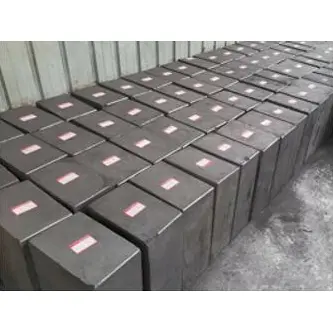
SIKAIDA’s graphite processing facility, established in 2012, is equipped with advanced processing and testing equipment supporting industrial applications.
| Equipment | Quantity / Capability | Function |
|---|---|---|
| High-precision engraving and milling machines | 20 units | Precision machining operations |
| Vertical graphite sawing machines | 2 units | Material preparation |
| Graphite wire cutting sawing machines | 2 units | Detailed cutting processes |
| Coordinate Measuring Machine (CMM) | 1 unit | Dimensional inspection |
| 2D measuring instrument | 1 unit | Precision verification |
| Roughness tester | Available | Surface quality inspection |
These capabilities support the production of precision components and provide technical support for industries requiring accurate machining.
Future Trends in Automotive Stamping Die Development
The next generation of automotive manufacturing will continue to focus on lightweight structures, intelligent production, and higher efficiency.
| Future Trend | Expected Impact |
|---|---|
| Wider use of lightweight alloys | Requires more flexible die designs |
| EV platform expansion | Creates demand for new structural components |
| Integrated vehicle structures | Increases requirements for large precision tooling |
| Digital production management | Improves process tracking and quality control |
| Longer tool life requirements | Encourages advanced materials and surface technologies |
These changes indicate that stamping technology will continue moving away from traditional standardized approaches toward more customized and precision-oriented solutions.
Building the Next Generation of Automotive Manufacturing
Lightweight materials are not simply replacing traditional materials; they are changing the entire philosophy behind vehicle production. Every improvement in material technology creates new expectations for design, machining, and quality management.
The future of automotive stamping will depend on the ability to balance lightweight design goals with production reliability. Companies involved in tooling development must continuously improve precision control, processing capability, and technical coordination to meet these evolving requirements.
As electric vehicles and lightweight structures continue expanding, Automotive Stamping Dies will remain a critical foundation for efficient vehicle manufacturing. With experience in stamping molds, precision mold components, mold bases, and related processing capabilities, SIKAIDA (Tianjin) International Trade Co., Ltd. continues to support the development of advanced tooling solutions, including Automotive Stamping Dies, precision molds, automotive mold components, and graphite processing products.
Related News
- How Is Isostatic Graphite Supporting the Next Generation of Precision EDM?
- How Is the High-Precision Mold Base Market ($3.2 Billion in 2025) Being Reshaped by EV Lightweighting and Integrated Die-Casting Trends?
- How Do Ultra-High Precision Mold Bases Improve Manufacturing Accuracy and Efficiency?
- What Makes Standard Precision Mold Bases Essential for High-Quality Manufacturing?
- Why Are Automotive Body Exterior Panel Stamping Molds Crucial in Modern Car Manufacturing?
- How Do Automotive Interior Parts Injection Molds Improve Quality and Efficiency?
Leave me a message