English
- English
- Español
- Português
- русский
- Français
- 日本語
- Deutsch
- tiếng Việt
- Italiano
- Nederlands
- ภาษาไทย
- Polski
- 한국어
- Svenska
- magyar
- Malay
- বাংলা ভাষার
- Dansk
- Suomi
- हिन्दी
- Pilipino
- Türkçe
- Gaeilge
- العربية
- Indonesia
- Norsk
- تمل
- český
- ελληνικά
- український
- Javanese
- فارسی
- தமிழ்
- తెలుగు
- नेपाली
- Burmese
- български
- ລາວ
- Latine
- Қазақша
- Euskal
- Azərbaycan
- Slovenský jazyk
- Македонски
- Lietuvos
- Eesti Keel
- Română
- Slovenski
- मराठी
- Srpski језик

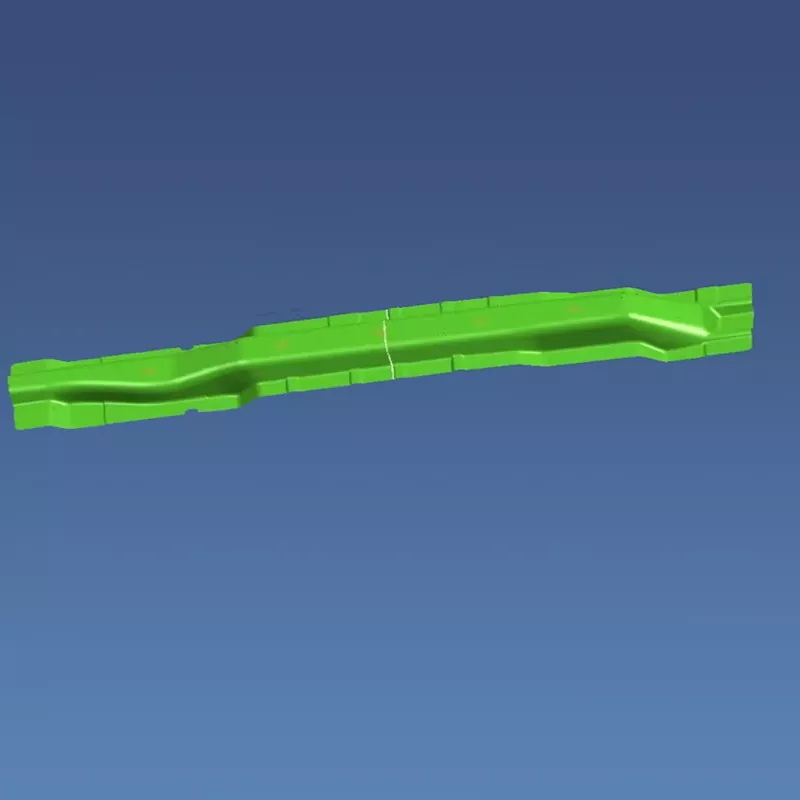
Automotive Reinforcing Beam Stamping Dies
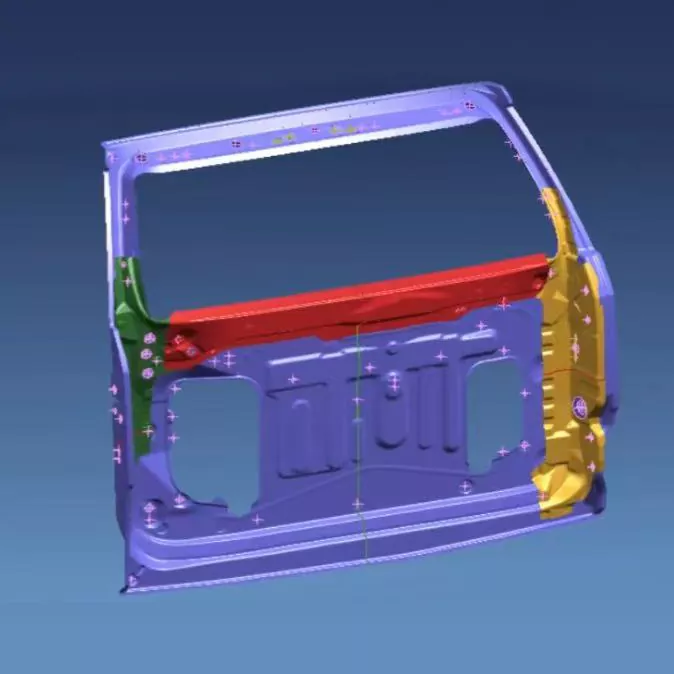
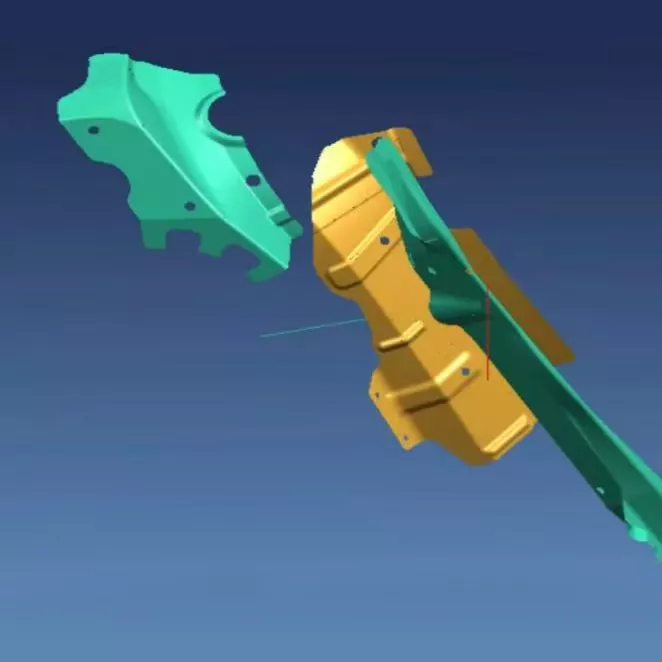
Automotive reinforcing beam stamping parts are critical safety structural components of automotive body-in-white, and the quality of their die manufacturing directly affects body strength, crash safety, and lightweighting. As a professional automotive stamping die manufacturer, SIKAIDA focuses on the R&D and production of high-precision, high-reliability Automotive Reinforcing Beam Stamping Dies, integrating advanced technologies from multiple fields. Headquartered in China, SIKAIDA is a trusted supplier in the automotive die industry, providing high-quality products and technical support to global customers.
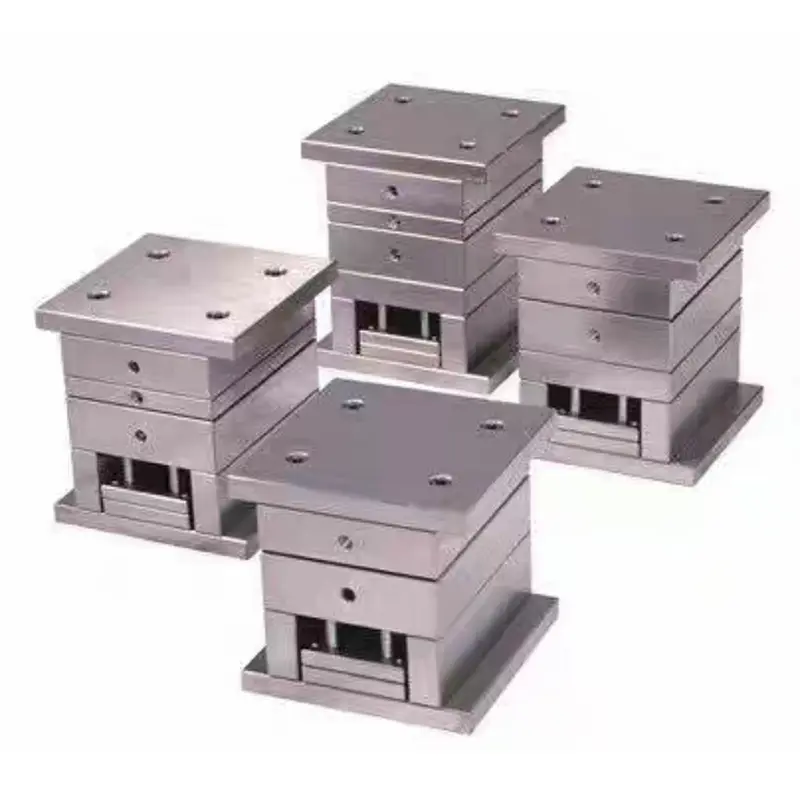
SIKAIDA Automotive Reinforcing Beam Stamping Dies are large, high-precision dies used for stamping reinforcing beams from sheet metal. As a core product, their design and manufacturing meet automotive safety and lightweighting requirements, integrating cutting-edge technologies from multiple fields. Our factory is equipped with advanced equipment and a professional team to ensure that the dies meet international standards and stably produce high-performance parts.
Product Details
1. High-Strength Material Application
Reinforcing beams often utilize lightweight materials such as high-strength steel and aluminum alloys. SIKAIDA Automotive Reinforcing Beam Stamping Dies are designed to fully adapt to material properties, optimizing structural and process parameters to ensure dimensional accuracy and mechanical properties of the stamped parts.
2. Complex Surface and Rib System Design
The reinforced beam structure is complex. SIKAIDA utilizes scientific surface design to precisely control material flow, avoiding defects such as wrinkling and cracking, ensuring the stability of the reinforced beam structure.
3. Precision Forming Control
Reinforced beam stamping parts require dimensional accuracy of ±0.05mm and excellent surface quality. SIKAIDA molds are equipped with high-precision guiding, blanking, and demolding mechanisms to ensure product consistency and meet stringent quality requirements.
4. Multi-Station Integrated Design
SIKAIDA employs multi-station progressive or continuous die designs, integrating multiple processes to significantly improve production efficiency and product consistency, reducing customer production costs.
5. Advanced Lubrication and Discharge System
Addressing the challenges of forming high-strength steel, SIKAIDA Automotive Reinforcing Beam Stamping Dies are equipped with an automatic lubrication and optimized discharge system, reducing friction, preventing blockages, and improving production efficiency and mold life.
Product Features and Applications
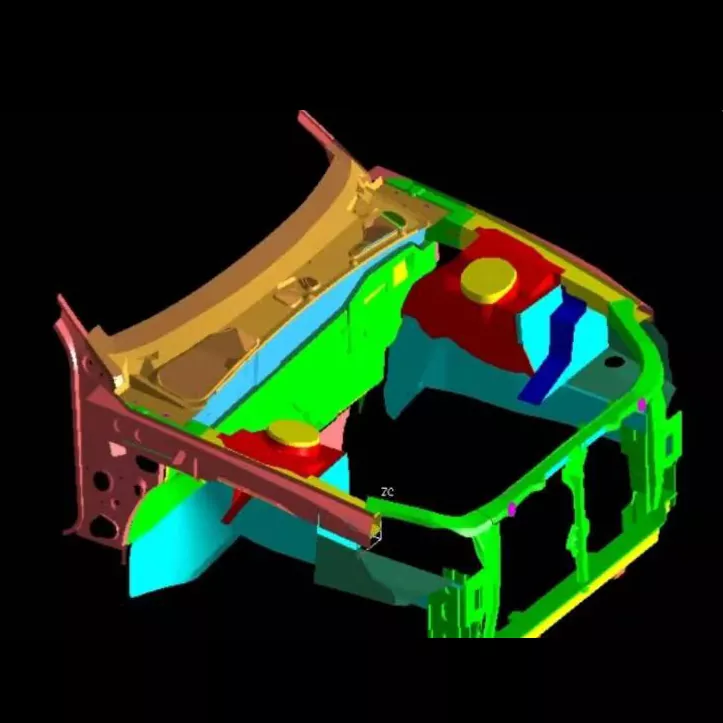
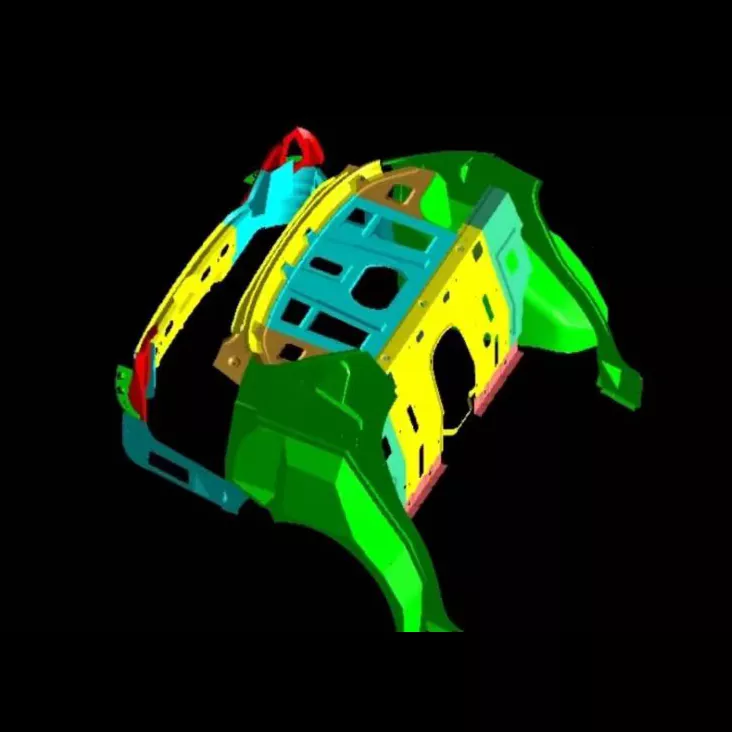
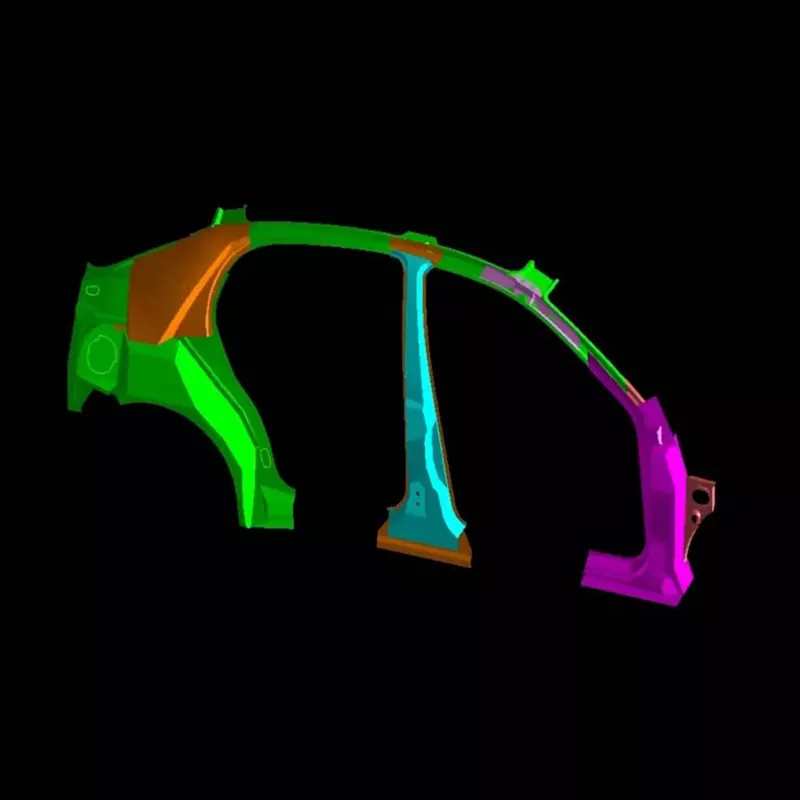
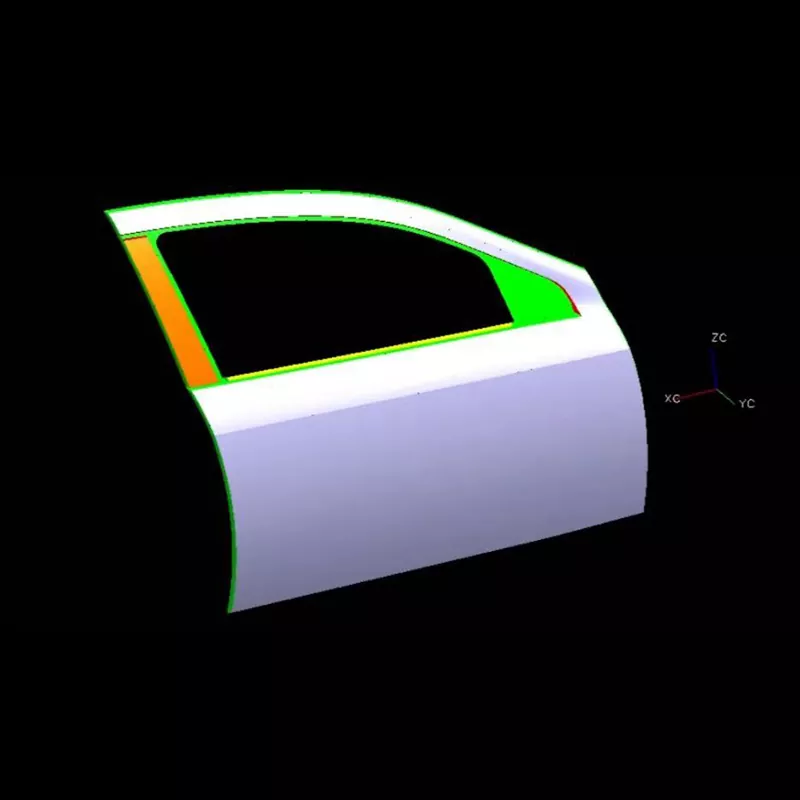
1. Body Structure Reinforcement: Used in key areas such as door anti-collision beams and A/B/C pillars to improve torsional rigidity and collision safety.
2. Lightweight Solution: Achieves a 15-25% weight reduction in parts through optimized design and lightweight materials, balancing strength and lightweight requirements.
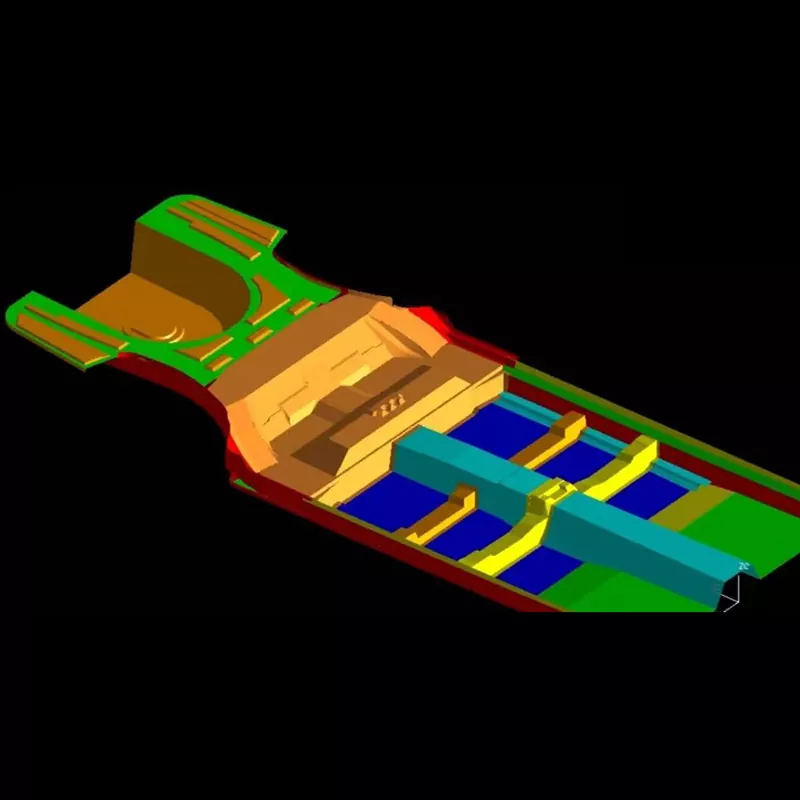
3. Chassis System Reinforcement: Used in key chassis components such as the subframe to improve vehicle handling stability and durability.
Manufacturing Process Introduction
1. CAE Analysis and Process Design
SIKAIDA uses professional software for formability analysis to optimize processes and mold structures in advance, avoid potential problems, shorten the R&D cycle, and reduce costs.
2. Mold Design
The R&D team uses professional software for full 3D design, focusing on key aspects such as punch and die clearance and blank holder design to ensure long-term mold stability and reliability.
3. Material Selection
- Mold Base: High-quality carbon structural steel such as 45 steel and P20 to ensure overall rigidity.
- Working Parts: Cr12MoV steel or cemented carbide, improving wear resistance and lifespan.
- Guide Components: GCr15 bearing steel, ensuring guiding accuracy.
- Elastic Components: 60Si2MnA spring steel, ensuring stable material pressing and demolding.
4. Precision Machining
Rough Machining: Roughing with large equipment, leaving a 0.2-0.5mm allowance for finish machining.
Finish Machining: Using high-speed CNC, wire cutting, EDM, etc., ensuring surface accuracy to ±0.01mm and optimizing surface finish.
Surface Treatment: Using nitriding, coating, etc., improving mold hardness and wear resistance, providing rust prevention, and extending service life.
5. Assembly and Debugging (T0 Trial Mold)
Professional personnel assemble the mold and conduct a T0 trial mold, repeatedly adjusting process parameters, modifying and optimizing the mold until the parts meet the drawing requirements.
Development Trends
1. Ultra-High Strength Steel Forming Technology
With the increasing demand for lightweighting, SIKAIDA has developed mold technology adapted to ultra-high strength steels with strengths exceeding 1500MPa, employing advanced processes such as hot forming to enhance safety and lightweight support.
2. Intelligent and Digital Monitoring
SIKAIDA integrates intelligent technology into the manufacturing of Automotive Reinforcing Beam Stamping Dies, embedding sensors for real-time monitoring and combining digital twin technology to achieve parameter self-optimization and virtual debugging, improving R&D efficiency.
3. Multi-Material Forming Technology
For novel structures such as steel-aluminum composites, SIKAIDA has developed specialized molds and processes to achieve integrated multi-material forming, further reducing weight.
4. Additive Manufacturing Technology Applications
SIKAIDA applies 3D printing technology to manufacture complex mold structures, shortening manufacturing cycles, improving mold performance and lifespan, and enhancing customer competitiveness.
Frequently Asked Questions
Q1: What materials are typically used in Automotive Reinforcing Beam Stamping Dies?
A1: The mold base commonly uses high-quality carbon structural steel such as 45 steel and P20. The working parts (punch and die) commonly use high-carbon high-chromium steel (such as Cr12MoV), high-speed steel, or cemented carbide. Guide components use high-carbon chromium bearing steel (such as GCr15), and elastic components use high-quality spring steel (such as 60Si2MnA). Different materials and heat treatment processes can be selected according to production volume and usage requirements.
Q2: How long is the production cycle for automotive reinforcing beam stamping dies?
A2: The production cycle for automotive reinforcing beam stamping dies is typically 8-15 months, depending on factors such as part complexity, material formability, technical requirements, and production capacity. Complex multi-station progressive dies or dies using new materials and processes will have a longer development cycle. Their development involves multiple stages including design, CAE analysis, precision machining, heat treatment, assembly, and debugging, requiring strict quality control and repeated trial molding optimization to ensure mold performance and product quality.
Hot Tags: Automotive Reinforcing Beam Stamping Dies, China, Manufacturer, Supplier, Factory
Send Inquiry
Contact Info
-
Address
Fengze Two Avenue, Balitai Industrial Park, Jinnan District, Tianjin City, China
-
Tel
-
E-mail
Welcome to our website! For inquiries about our products or pricelist, please leave your email to us and we will be in touch within 24 hours.