English
- English
- Español
- Português
- русский
- Français
- 日本語
- Deutsch
- tiếng Việt
- Italiano
- Nederlands
- ภาษาไทย
- Polski
- 한국어
- Svenska
- magyar
- Malay
- বাংলা ভাষার
- Dansk
- Suomi
- हिन्दी
- Pilipino
- Türkçe
- Gaeilge
- العربية
- Indonesia
- Norsk
- تمل
- český
- ελληνικά
- український
- Javanese
- فارسی
- தமிழ்
- తెలుగు
- नेपाली
- Burmese
- български
- ລາວ
- Latine
- Қазақша
- Euskal
- Azərbaycan
- Slovenský jazyk
- Македонски
- Lietuvos
- Eesti Keel
- Română
- Slovenski
- मराठी
- Srpski језик

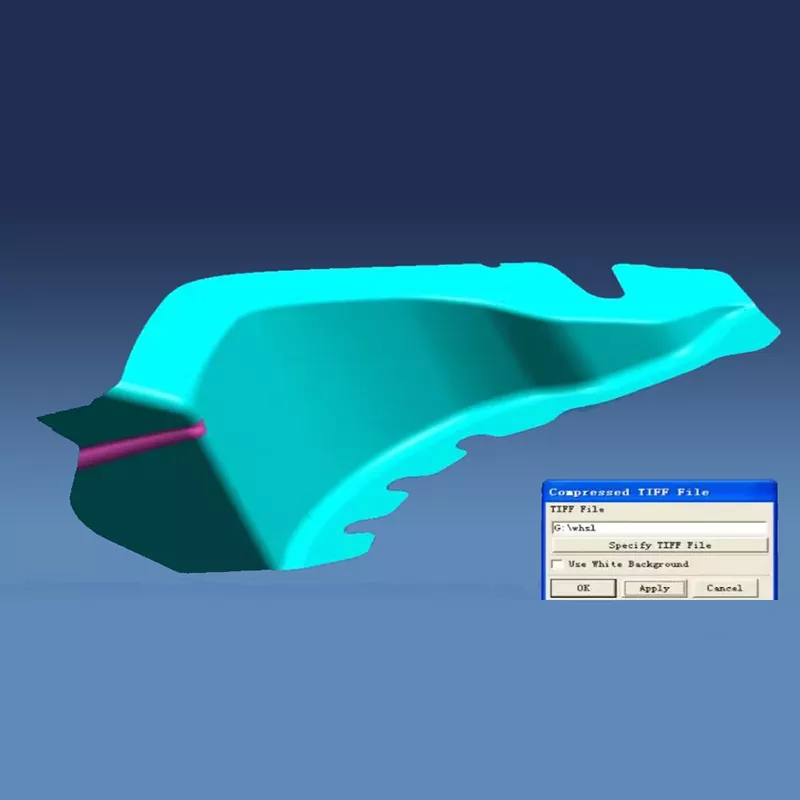
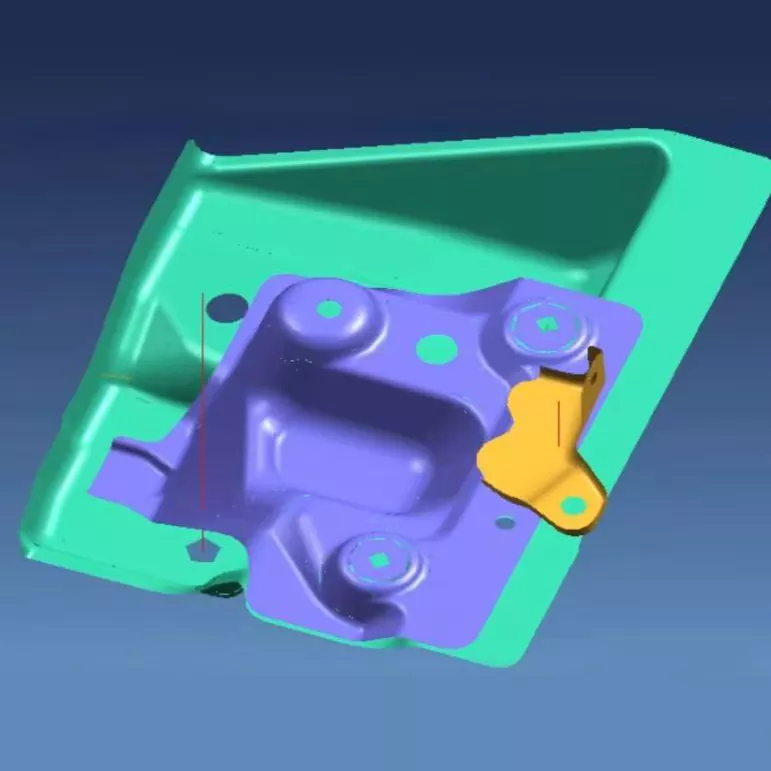
Automotive Small Bracket Stamping Dies
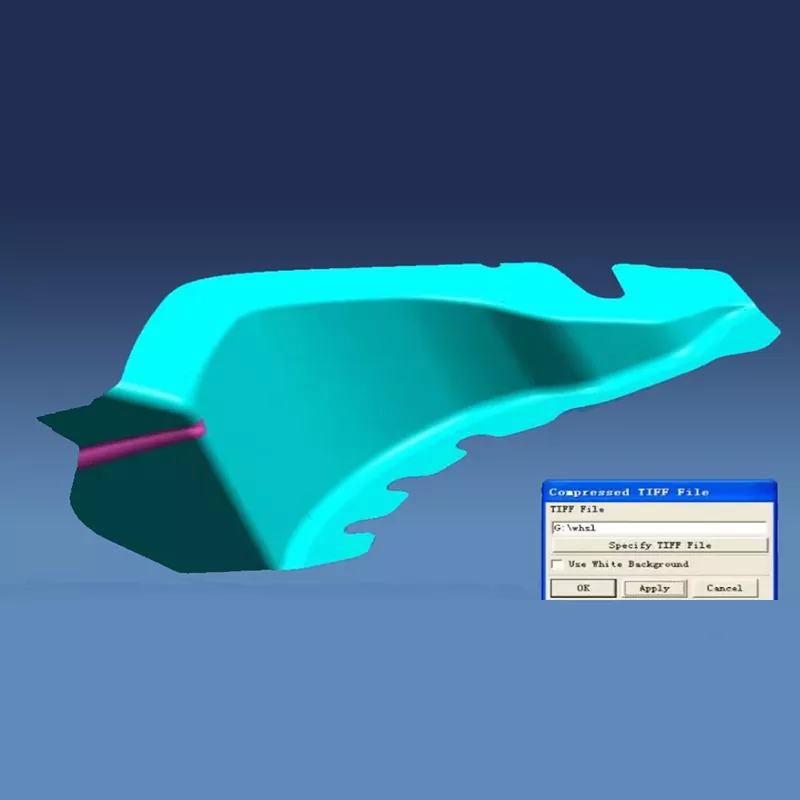
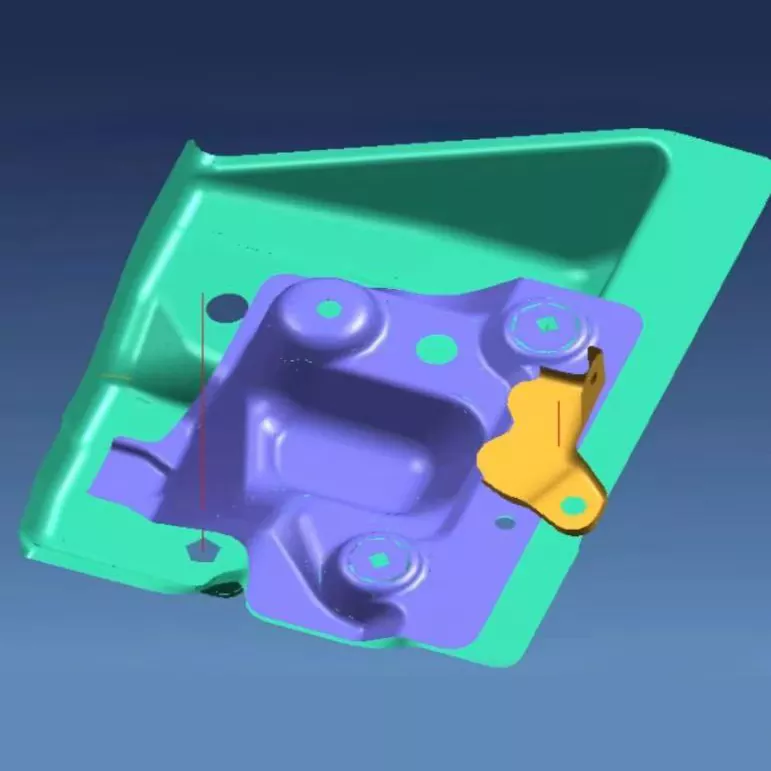
SIKAIDA Automotive Small Bracket Stamping Dies are high-precision tooling equipment for mass production of critical load-bearing brackets for automotive bodies. They integrate complex structure forming, precision hole machining, and a multi-functional connection system to ensure bracket rigidity and positioning accuracy. As a professional manufacturer in China, SIKAIDA provides stable and durable core equipment and serves global automakers as a reliable supplier. All molds are manufactured in its own advanced factory according to international standards.
Small automotive brackets are critical load-bearing components used to support assemblies, fix positions, connect structures, and transfer loads. SIKAIDA Automotive Small Bracket Stamping Dies are specifically designed for various precision brackets such as those for engines and suspensions, integrating complex support and precision hole positioning to meet the stringent requirements of automotive production.
Core Product Features
1. Complex Support Structure Forming
Despite the compact size and complex structure of the brackets, SIKAIDA molds, through precise simulation and springback compensation, control critical dimensions within ±0.1mm, ensuring flatness, hole accuracy, and structural rigidity meet standards.
2. High Strength and High Rigidity
The core components of the Automotive Small Bracket Stamping Dies utilize high-hardness mold steels such as SKD11 and Cr12MoV, achieving a hardness of HRC 48–52 after heat treatment. This allows them to withstand high-frequency impact loads and has a service life exceeding 500,000 cycles, ensuring stable load-bearing capacity.
3. Multifunctional Integrated Design
Integrating multiple processes such as stamping, bending, and punching, and incorporating mechanisms like slide blocks and nitrogen springs, complex processing can be completed in a single stroke, significantly improving production efficiency and product quality.
4. Precision Hole Positions and Connection System
Installation hole accuracy reaches ±0.05mm, and hole wall roughness Ra 0.8. Optimized flanging and riveting connection structures ensure a secure and non-loosening bracket connection, guaranteeing long-term reliable vehicle use.
5. Intelligent Nesting and CAE Optimization
Utilizing CAE software such as AutoForm to optimize nesting, material utilization is increased to over 85%, effectively reducing forming defects and lowering the scrap rate.
Application Areas
SIKAIDA Automotive Small Bracket Stamping Dies have wide applications, covering the production of engine, suspension, dashboard, seat, battery, door, and exhaust system brackets.
Manufacturing Process
1. Product Design and CAE Analysis
Creating simulation and process optimization are performed using CAE software to identify potential defects and determine the optimal solution, ensuring successful mold manufacturing.
2. Mold Structure 3D Design
Automotive Small Bracket Stamping Dies utilize full 3D design software such as UG and CATIA to refine cavities, guide systems, and other components, ensuring a rational mold structure and ease of maintenance.
3. Material Selection
Working parts are made of hard mold steel such as SKD11, the mold base is made of 45 steel with heat treatment, standard parts use GCr15 bearing steel, and punching parts use high-speed steel or cemented carbide to ensure precision and durability.
4. Precision Machining
Rough machining allows for allowances, and precision machining ensures accuracy. Surface treatments such as nitriding and hard chrome plating further enhance the mold's hardness and wear resistance, guaranteeing product quality.
5. Assembly and Debugging
After precision assembly, the Automotive Small Bracket Stamping Dies undergo trial pressing and debugging. First-piece inspection and batch trial production verify the mold's accuracy, stability, and reliability.
Frequently Asked Questions
Q1: What materials are typically used in Automotive Small Bracket Stamping Dies?
A1: Working parts primarily use high-hardness mold steels such as SKD11, Cr12MoV, and DC53. The mold frame uses structural steels such as 45 steel and Q235. Standard parts such as guide pillars and bushings use bearing steel GCr15. For high-wear areas such as punching holes, hard alloy or high-speed steel is sometimes used to ensure the mold's strength, hardness, and durability.
Q2: How long is the production cycle for automotive small bracket molds?
A2: Depending on the mold's complexity and precision requirements, the production cycle is typically 10-18 weeks. Simple bracket molds take approximately 10 weeks to manufacture, medium-complexity bracket molds take 14 weeks, and high-precision complex bracket molds may require 18 weeks or more. The specific cycle depends on the complexity of the bracket structure, the accuracy requirements of the holes, and the difficulty of the machining process.
Q3: What is the service life of Automotive Small Bracket Stamping Dies?
A3: Under normal use and maintenance conditions, the lifespan of small bracket stamping dies can reach over 500,000 cycles. Through the selection of high-quality materials, proper heat treatment, and precision machining, the lifespan of some dies can reach 1 million cycles. Especially for high-wear parts such as punching, regular maintenance and replacement are required to ensure product quality.
Q4: How to ensure the accuracy and support performance of stamped brackets?
A4: Through CAE analysis to optimize process parameters, adopting high-precision guiding systems, controlling material springback, and regularly checking and maintaining die accuracy, the dimensional accuracy of the bracket can be controlled within ±0.1mm, and the flatness of the support surface can reach 0.05mm/m. At the same time, reasonable structural design and heat treatment processes ensure that the bracket has sufficient support rigidity and connection strength.
Q5: What are the key control points in the manufacturing process of bracket molds?
A5: Key control points in bracket mold manufacturing include: ① Precision hole machining to ensure installation hole accuracy; ② Support surface machining to ensure flatness and smoothness; ③ Connection structure forming to ensure connection strength; ④ Heat treatment process to ensure hardness and toughness; ⑤ Assembly and debugging to ensure mold accuracy and operational stability. Each control point requires strict quality inspection and process control.
Send Inquiry
Contact Info
-
Address
Fengze Two Avenue, Balitai Industrial Park, Jinnan District, Tianjin City, China
-
Tel
-
Email
Welcome to our website! For inquiries about our products or pricelist, please leave your email to us and we will be in touch within 24 hours.
Related Products
News Recommendations